Dungeonbound Fusion Forge, Mega Forge & Shrines Guide
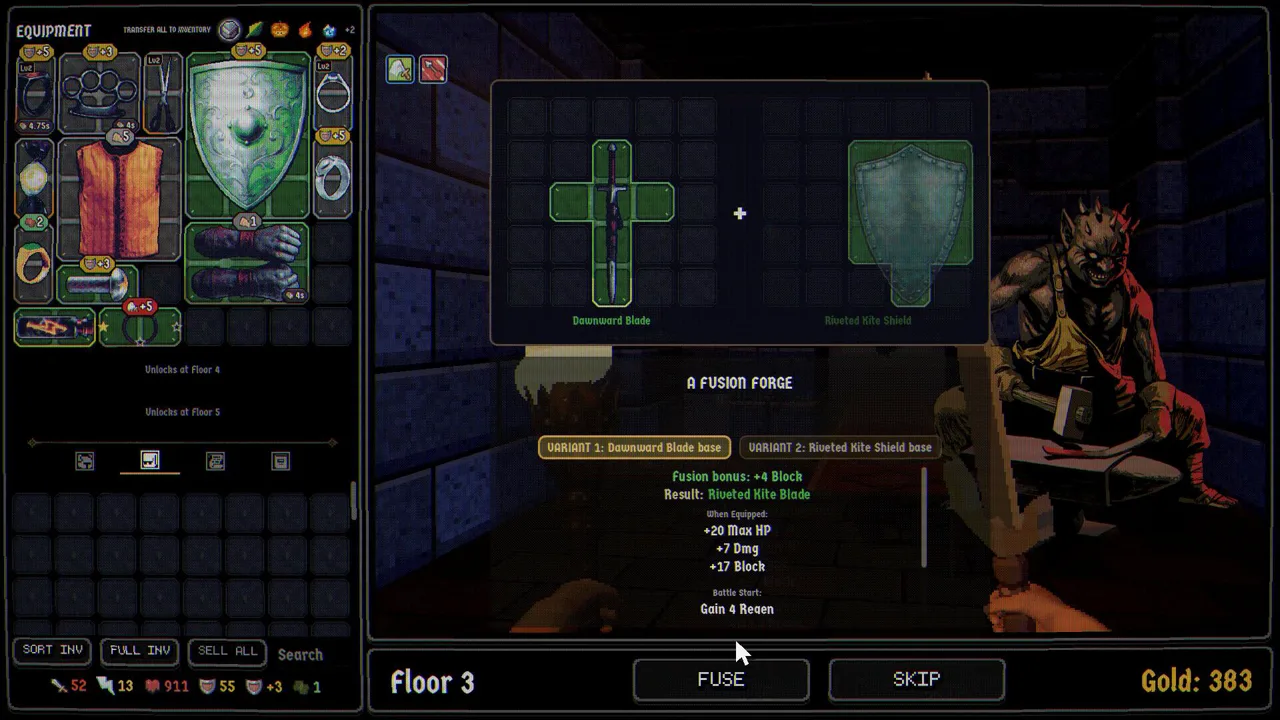
At Dungeonbound's Fusion Forge (most frequent on Floors 2–3), any two items or a refillable potion merge into one hybrid keeping both parents' effects, gems, growth, curses, and bow arrows—and can roll +1 Multicast. Mega Forges appear on Floors 5 and 10, Upgrade Altar reuses cost 60% + 25% per reuse, and Patch v1.0.12 upgraded Sanctifying Altar (always grants its stat plus Dodge/status) and Gambler's Forge Affinity (also levels the item up).
1. How the Fusion Forge Works
The Fusion Forge is Dungeonbound's signature crafting station: drop any two items (or an item plus a refillable Potion) into the forge slots to combine them into a single hybrid piece. When choosing between the two generated fusion variants in v0.1.51+, the preview displays exact before-and-after stats, the fusion bonus, and whether a rare bonus roll grants +1 Multicast.
Key rules governing every Fusion Forge combine (updated through Patch v1.0.12):
- Shared Timer Consolidation: Fusing two timed items merges their clocks so the hybrid fires on a single unified timer rather than two competing cooldowns.
- Gem, Growth & Ability Preservation (v1.0.12): Fused and Mega-Forged items keep only their own gem slots, and Patch v1.0.12 ensures every forged hybrid cleanly retains both parents' gems, growth, and abilities (with identical gems merging cleanly).
- Curses & Bow Arrows: Forged items grow every stat as they level up, retain both parents' curses, and any fused Bow keeps its arrows. See the Curses & Haunted Builds Guide for floor-scaling curse rules.
- Potion Compatibility & Fusion: Since v0.1.50–v0.1.51, potions work just like any other inventory piece—they can accept gems, upgrade at altars, gamble at the Gambler's Forge, and fuse directly into any item so the hybrid keeps all effects with Ammo that refills every battle.
- Peak Spawn Windows: The Fusion Forge is rare on Floor 1 and spawns most reliably on Floors 2 and 3, while the Mega Forge almost always appears on Floor 5 and Floor 10.
2. Mega Forge, Upgrade Altar & Shrine Reuse Pricing
While standard Fusion Forges combine two pieces cleanly, the Mega Forge (appearing reliably on Floors 5 and 10, plus increased frequency since v0.1.46) handles massive consolidations and explicitly warns you which stats or slots you would lose before confirming.
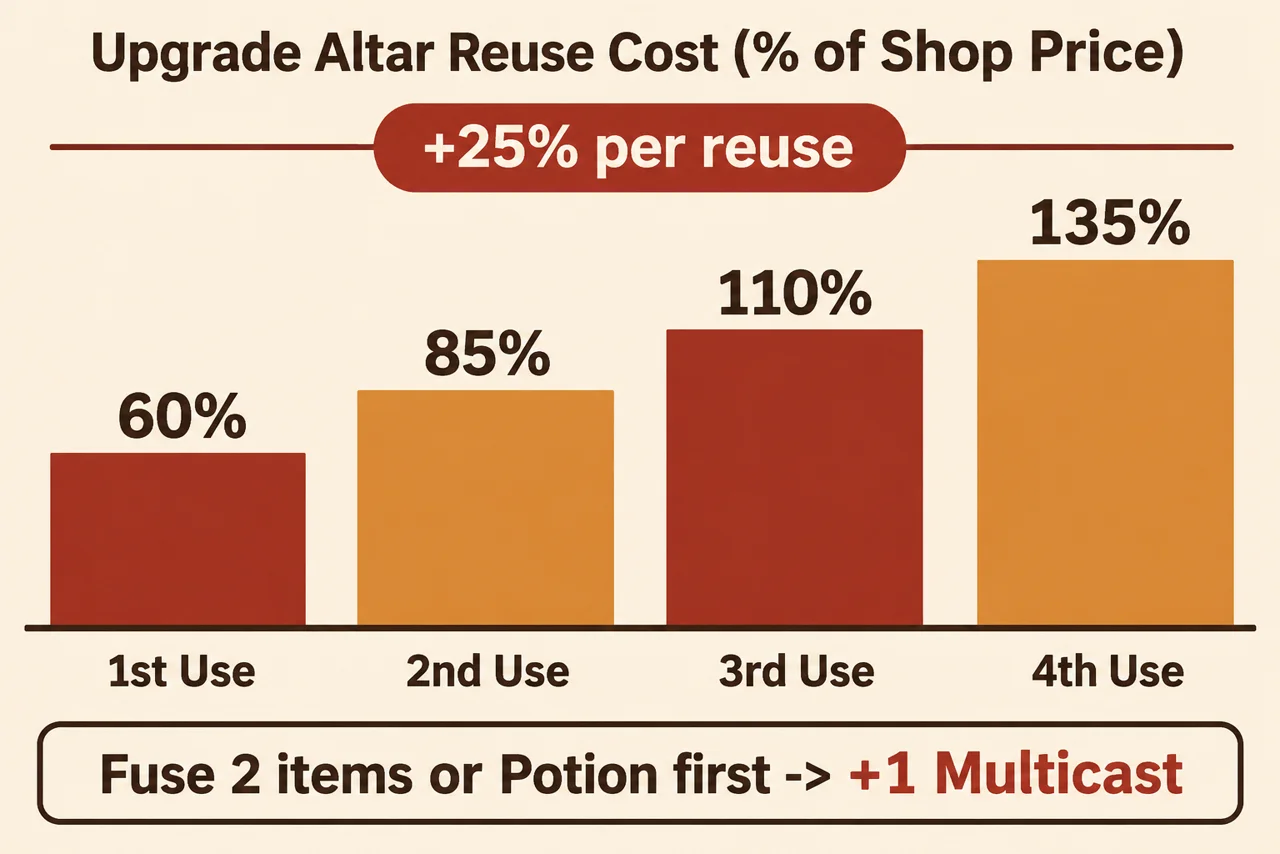
At the Upgrade Altar and Gambler's Forge, your initial upgrade keeps the staged item right on the shrine pedestal (v0.1.51), allowing you to pay Gold for additional reuses during that visit. Under v0.1.58 balance rules, reuses are priced strictly from the staged item's shop value (for example, a 40 Gold item costs 24g on its 1st reuse and 34g on its 2nd):
- 1st Reuse (after initial activation): 60% of the item's shop price (
24gon a 40g item). - Each Additional Reuse: +25% of the item's shop price per extra activation (
85%,110%,135%, and so on). - Stat Scaling: Every level-up improves even small flat numbers (such as
1 Freeze), grants Multicast updates to item pills, and prevents negative-stat rollover bugs on heavily upgraded items (fixed in Patch v1.0.5).
3. Complete Dungeonbound Shrines & Altars Reference
| Optimal Floor & Tip | ||
|---|---|---|
| Fusion Forge | Combine any 2 items or fuse a Potion into gear; pick from 2 hybrid variants | Floors 2–3 peak; combine fast triggers or refillable potions into core weapons. |
| Mega Forge | High-tier mass fusion with explicit loss preview before committing | Almost guaranteed on Floors 5 and 10; ideal for freeing grid space late-run. |
| Upgrade Altar | Level up a staged piece repeatedly; Gold reuse starts at 60% (+25% each extra) | Best on scaled hybrids after a Floor 2–3 Fusion Forge. |
| Affinity Forge | Changes one of an item's types to match one of your hero's native types | Turns off-class drops into shop/hero synergy pieces. |
| Sanctifying Altar | Always grants its stat and can offer Dodge or a status (v1.0.12) | Use to add reliable Dodge or status scaling while cleaning up awkward loadouts. |
| Curse Shrine | Adds a Curse trade-off to boost power (cursed traits grow with floors in v1.0.12 and stay through fusion) | Remember Luck no longer boosts curse drawbacks as of v0.1.51. |
| Gemcutter's Bench | Adds/cuts gem sockets; also appears when equipped items fill all gem slots | Pair with status gems (Bleed/Poison/Burn) or Fletcher's Garnet for Bows. |
| Gambler's Forge | Gamble on upgrading items and potions (60% + 25%); AFFINITY option also levels the item up (v1.0.12) | Accepts potions since v0.1.50; jackpots preserve socketed item rarity. |
| Wheel of Fortune | Spins for boons (6 stacks) or 4× Gold payout; first spin capped at current Gold | Crowns land more often and Rot less often since v0.1.46; watch for rare amber glow. |
| Dismantle Shrine | Breaks down unwanted equipment for resources | Check before overfilling your bag on mid-run routes. |
4. Optimal 5-Step Forge & Potion Merging Workflow
- Socket gems before fusing when possible: Every gem socketed on either parent item transfers onto the fused hybrid, even though the hybrid keeps only its own base gem slots.
- Pick the higher-impact variant or +1 Multicast: Always read both Fusion Forge preview cards; a rare bonus that adds
+1 Multicastscales trigger builds dramatically. - Fuse a potion into a fast weapon or timed trigger: Because forged potions carry per-battle refilling Ammo, pairing a potion with a quick timer turns one burst consumable into continuous battle value.
- Level identical potions by dragging them together: Two identical potions dropped onto each other automatically level up without spending a Forge visit.
- Upgrade after fusing, not before: Consolidate two pieces into one strong hybrid first, then spend Gold at the Upgrade Altar so your 60% / 85% / 110% reuse fees boost combined stats instead of a temporary component.
Sources
| Dungeonbound Encyclopedia & Strategy Index (Patch v1.0.12) | |
|---|---|
| Core Systems | |
| Items & Builds | |
| Endgame & Modes | |
Community Discussion (0)